Alert
Ghana Showcases Local Content Progress at Tanzania's Mining Forum
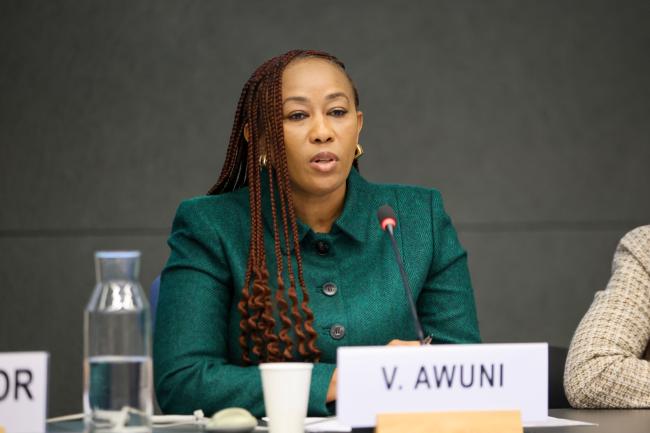
Ghana has highlighted significant progress in local content development within its mining sector at the Fifth Local Content Compliance Forum held from 22–24 July 2026 in Mwanza, Tanzania. Representing the country, the Deputy Chief Executive Officer of the Minerals Commission, Mrs. Victoria Awuni, shared Ghana's experience in implementing its localization programme during the regional forum, which brought together regulators, mining companies, policymakers, service providers, academia, and development partners under the theme, "From Dialogue to Action: Building a Resilient Mining Sector through Local Content and Industrialization."
Presenting Ghana's achievements, Mrs. Awuni noted that mining contributed about 70 percent of the country's gross merchandise export earnings in 2025, generating nearly US$21 billion in export revenue and over GH¢27.7 billion in direct tax revenue, while gold production reached approximately six million ounces. She emphasized that Ghana's local content agenda has evolved beyond regulatory compliance into a strategic tool for economic transformation, anchored on Legislative Instrument (L.I.) 2431, which focuses on increasing local participation in goods and services procurement as well as employment within the mining industry.
According to her, local procurement has recorded remarkable growth over the past five years, with between 96 and 99 percent of items on Ghana's Local Procurement List sourced locally between 2020 and 2024. During the same period, the share of local procurement in total mining expenditure increased from 51 percent to 66 percent, translating into an estimated US$10.1 billion spent on Ghanaian suppliers. Industry-wide procurement also reached US$5.77 billion in 2025, representing a 54 percent increase over the previous year. While acknowledging these gains, she noted that local participation remains concentrated in areas such as contract mining, fuel supply, and financial services, with government now prioritizing domestic production of high-value mining inputs to deepen industrialization.
Mrs. Awuni further highlighted the Minerals Commission's digital Mine Support Service registration platform, which had registered 541 active service providers by July 2026, reflecting continued growth in local supplier participation. On employment, she explained that L.I. 2431 limits expatriate employment in mining operations while reserving several strategic positions for qualified Ghanaians. As a result, Ghanaian employment in the mining sector increased by more than 30 percent between 2020 and 2025, while expatriates accounted for just 1.28 percent of the industry's workforce.
She also drew attention to Ghana's Maiden Local Content Summit held in Takoradi earlier this year, whose resolutions now underpin the country's 2026–2030 Local Content Roadmap. The roadmap seeks to increase Ghanaian participation in mining support investments, strengthen local manufacturing, and promote greater value addition by reducing the export of raw minerals. Sharing Ghana's experience with other African countries, Mrs. Awuni encouraged governments to adopt clear local content legislation, maintain updated procurement lists, digitize supplier registration systems, incentivize indigenous participation, and regularly publish procurement and employment data to promote transparency and accountability.
For Lands and Mines Watch Ghana (LMWG), Ghana's presentation at the forum provides an important benchmark for assessing the effectiveness of the country's local content policies. The procurement, supplier registration, and employment figures presented by the Minerals Commission offer measurable indicators of progress while also highlighting areas that require further improvement. LMWG will continue to monitor the implementation of L.I. 2431 and the 2026–2030 Local Content Roadmap to ensure that policy commitments translate into sustainable opportunities for Ghanaian businesses, workers, and mining communities.
Media