Alert
*NAIMOS UNLEASHES FIVE-DAY ENFORCEMENT BLITZ ACROSS WASSA AMENFI CENTRAL AGAINST HEAVILY POLLUTED RIVERS, RAVAGED FORESTS AND FLOODED DEATH TRAPS*
#GalamseyUpdate
Dominase, Jedua, Ankasie, Agona and Kwaben, Wassa Amenfi Central District, Western Region | 23 – 27 May 2026
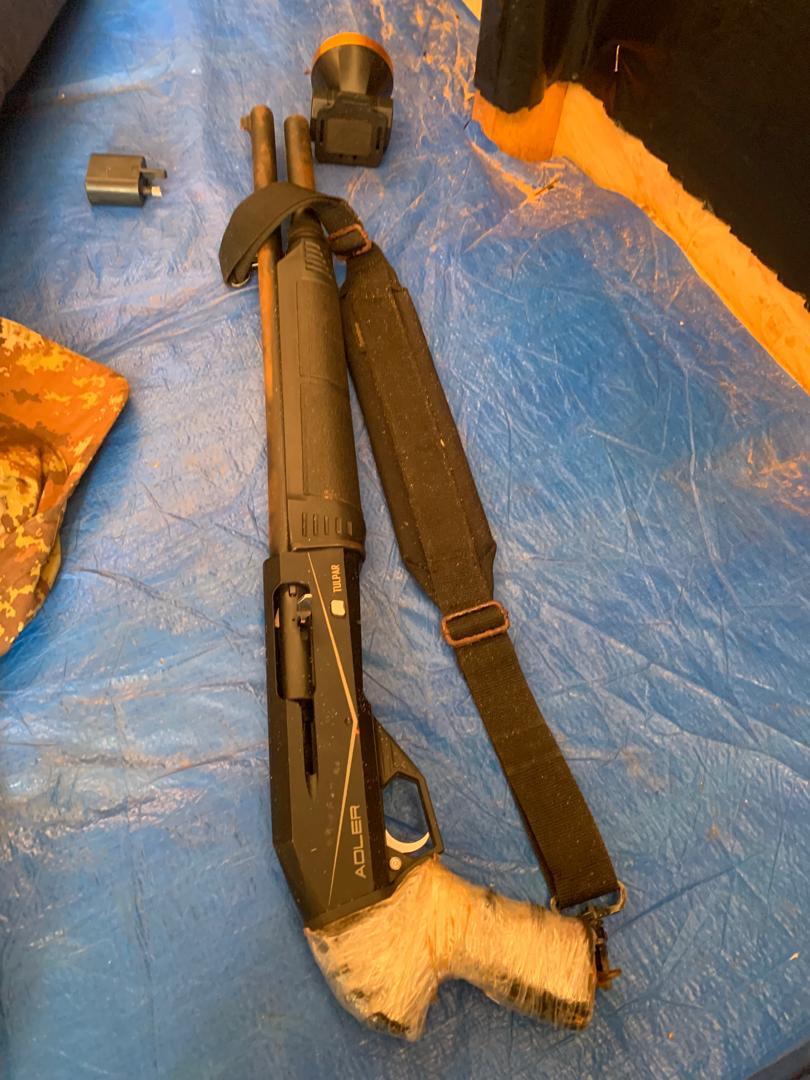
The National Anti-Illegal Mining Operations Secretariat (NAIMOS), has executed a sustained five-day enforcement campaign across the Wassa Amenfi Central District of the Western Region. The focused operations resulted in dismantling more than ninety (90) changfan machines, immobilising heavy excavators, recovering two (2) pump action firearms and fourteen (14) rounds of live ammunitions, and confronting first-hand the scale of ecological devastation that the galamsey enterprise has visited on the forests, rivers, and inhabited communities of the district.
The campaign, which ran from Saturday, 23 May to Wednesday, 27 May 2026, was directed at the entrenched illegal mining activities in the communities of Dominase, Jedua, Ankasie, Agona and Kwaben. What the taskforce documented over those five days is not the residue of casual or opportunistic mining but the cumulative imprint of an organised industrial enterprise that has hollowed out the forest floor, opened the land to rain-filled death traps, dammed and diverted the natural courses of rivers, poisoned and polluted the very waters on which entire communities depend for their daily survival, and entrenched armed elements within enclaves that ordinary citizens can no longer safely traverse.
The Secretariat wishes the public to confront the gravity of this devastation as plainly as the taskforce itself confronted it on the ground.
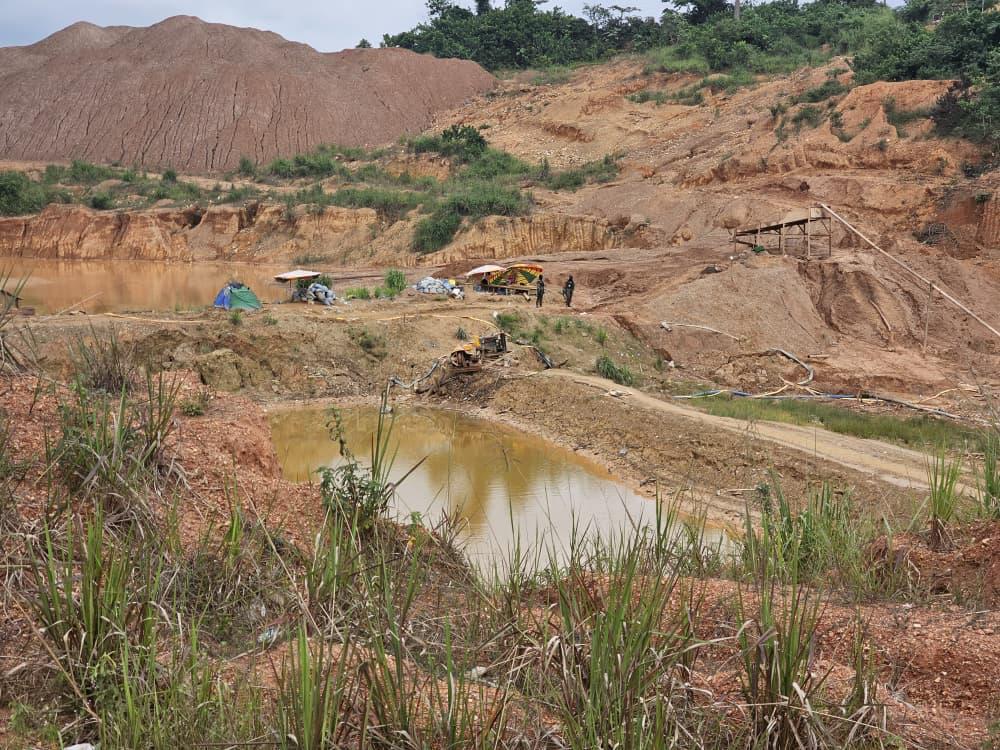
The campaign opened at approximately 0915 hours on Saturday, 23 May 2026, at Dominase, where the taskforce encountered in excess of one hundred (100) individuals engaged in active illegal mining. The forest at Dominase has been comprehensively degraded, with deep pits gouged into the earth at intervals across the worked area, each one an open hazard to children, livestock, and unwary residents of the surrounding community.
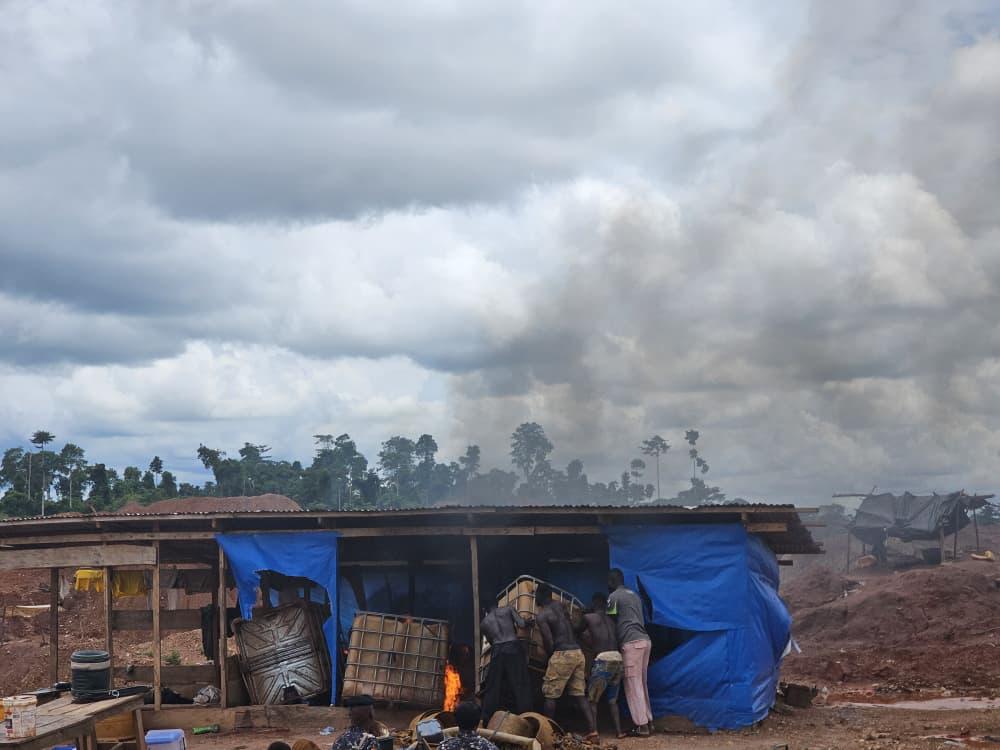
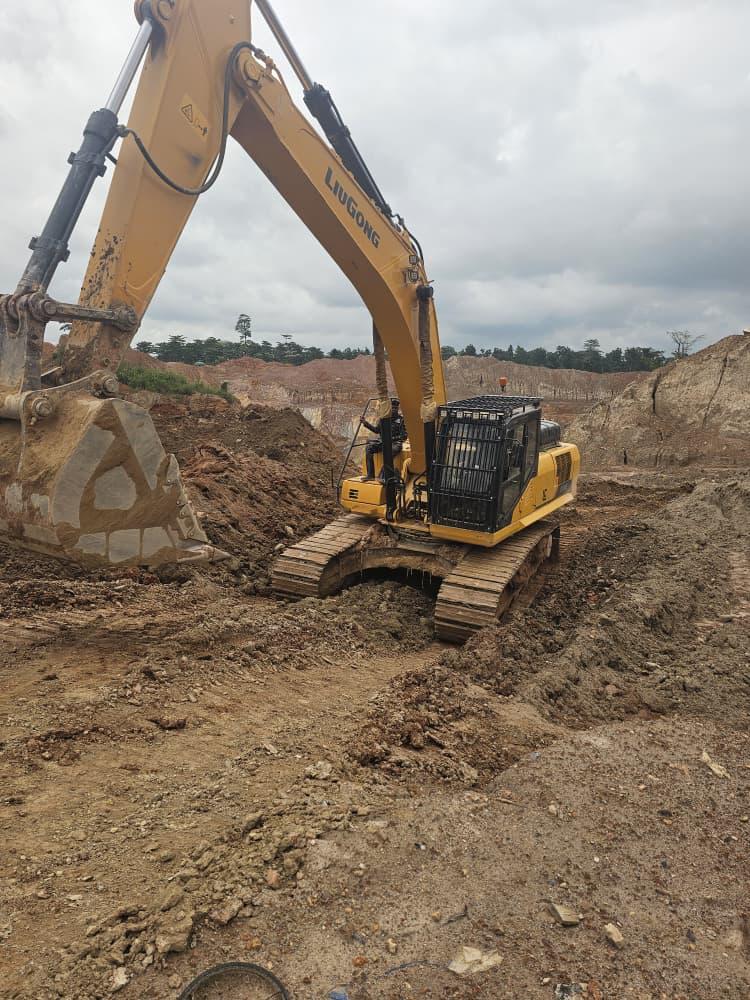
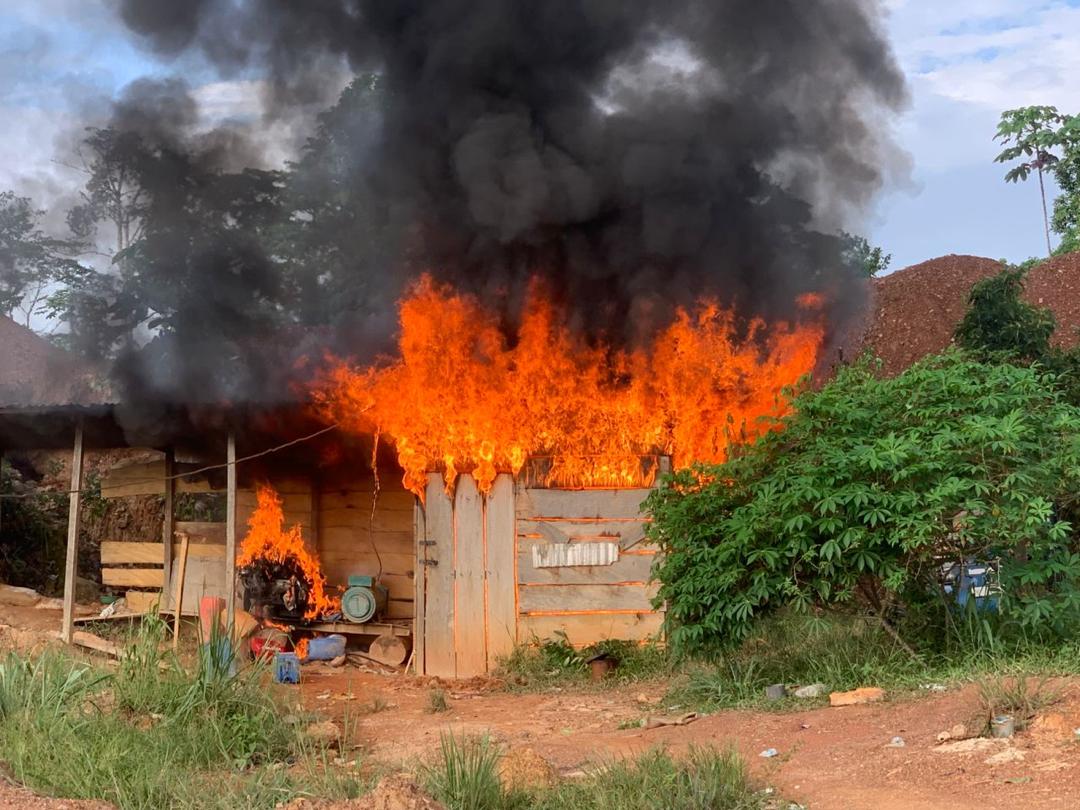
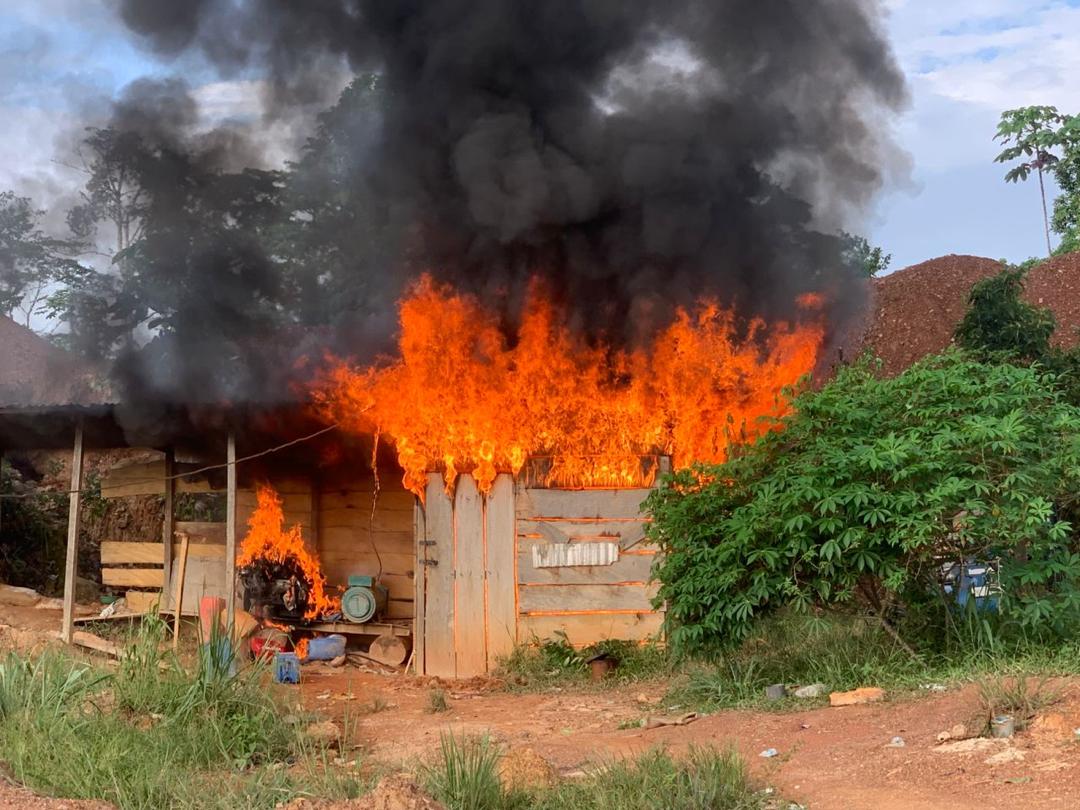
The Galamsey operators dispersed on sighting the NAIMOS taskforce. Three (3) excavators seen at the site were immobilised, twenty-five (25) changfan machines were destroyed, four (4) washing engines were set ablaze, and some makeshift structures supporting the operation were burnt. One (1) Wajin motorbike, one (1) Liugong monitor, one (1) Liugong control board, and seven (7) yellow gallons of diesel were seized from the site.
On Sunday, 24 May 2026, at 0730 hours, the taskforce proceeded to an illegal mining site at Jedua, where operators had invaded the lawful concession of Minev Company and were actively mining with excavators and changfan machines under the financing and patronage of one Mr Okyere, whom sources hint as a principal kingpin of illegal mining within the district and worth further investigations. Unfortunately, the operators fled on the arrival of the taskforce.
Notwithstanding certain attempts to dissuade the team from disabling the excavators in use at the site, the taskforce stood by its national mandate and proceeded with the operation in full. The excavators were duly immobilised, the makeshift structures and processing engines were burnt, and the operational footprint at Jedua was systematically dismantled.
On Monday, 25 May 2026, at 1020 hours, the taskforce executed a surgical strike at Ankasie, where the ecological condition of the worked area is among the most alarming encountered during the entire campaign. The forest cover at Ankasie has been razed by excavator action, the topsoil stripped, and the underlying ground excavated into deep valleys and ditches that the recent rains have now filled to form a network of open water bodies along the worked corridor. These are not pits in any orderly sense, but irregular, unmarked, and unfenced cavities that present immediate and lethal danger to any resident or child who strays into the area in the dark or in flood. A search of the makeshift structures at the site yielded two (2) pump action firearms and fourteen (14) rounds of live ammunition, confirming the armed character of the operation. The financier and patron of the Ankasie operation has been identified as one Nana Damoah, also a principal kingpin of illegal mining within the district. In excess of thirty (13) changfan machines were destroyed, five (5) washing engines were burnt, and the makeshift structures supporting the operation were set ablaze.
On Tuesday, 26 May 2026, at 0820 hours, the taskforce extended the campaign to Agona, where very deep mining pits were encountered alongside more than twenty (20) changfan machines. The depth and density of the excavations at Agona reflect a particularly aggressive and prolonged extraction regime, with the surrounding ground rendered structurally unstable and the forest canopy reduced to widely scattered remnants. All twenty (20) changfan machines were destroyed and burnt, and the associated makeshift structures were equally set ablaze. No excavator was found on site, the operators having quietly removed and concealed their machines within the surrounding community in anticipation of the taskforce's now constant presence within the district.
On Wednesday, 27 May 2026, at 0630 hours, the taskforce launched an early morning strike at Kwaben, where approximately fifty operators were sighted at the active mining site and fled at speed on the arrival of operatives. Ten (10) changfan machines were destroyed, the makeshift structures supporting the operation were burnt, and two (2) water pumping machines were seized. The devastation encountered at Kwaben is the most ecologically grievous of the entire campaign. Both the River Samire and the River Tano have been heavily polluted and severely discoloured by the continuous discharge of contaminated wastewater from the active mining operations along their banks. A further assessment of the site revealed several wooden washing platforms erected directly along sections of the river and being used to wash mined materials into the water itself. The seized pumping machines had been deployed to draw water from the river into the operation, only for the same water to be returned to the river laden with sediment and contaminants, in a closed cycle of progressive poisoning that has rendered both rivers, over time, hostile to aquatic life and unsafe for any downstream community to consume, to fish in, or to bathe in. In a decisive intervention to arrest the continuing destruction, the taskforce dismantled and destroyed the water pumping machines, severed and incinerated all water hoses, and burnt every wooden washing platform recovered at the site.
The cumulative environmental picture that emerges from the five days in Wassa Amenfi Central is one that cannot be overstated. Two (2) of the country's significant rivers, the Samire and the Tano, are visibly contaminated along the stretches passed through by the taskforce. Vast tracts of forest at Dominase, Jedua, Ankasie, Agona, and Kwaben have been stripped, excavated, and abandoned to the elements. The recent rains, instead of restoring the land, have filled the unfenced pits and created lethal open waters in the very heart of inhabited communities. The local hydrological cycle has been disrupted by the diversion of streams, the construction of artificial dams, and the continuous extraction and reinjection of polluted water. The biodiversity of the forest belt has been displaced or destroyed. And every one of these harms is being suffered, in the first instance, not by the absent financiers of the trade but by the women, children, farmers, and fisherfolk of the affected communities, whose lands, waters, and futures have been quietly mortgaged to the galamsey enterprise.
The five-day NAIMOS blitz therefore aimed to address the reckless devastation enumerated and signal in the sternest terms, to the galamsey operators and financiers of illegal mining within the Wassa Amenfi Central District and beyond of the Secretariat’s resolve at confronting the national cancer. The poisoning of the Samire and the Tano, the disfigurement of the forest belt of Wassa Amenfi, and the opening of death traps within walking distance of family homes are not abstract environmental concerns. They are immediate, measurable, and continuing crimes against the inhabitants of the affected communities and against the ecological inheritance of every Ghanaian yet to be born.
Indeed, the operatives of NAIMOS would frequent Dominase, Jedua, Ankasie, Agona, Kwaben, and every other community where illegal mining had ravaged. These operations would be sustained until the forests breathe again, rivers such as the Samire and the Tano run clean, the open pits are sealed, and the residents of these long-suffering communities reclaim the safety, water, and the land that have been stolen from them by the galamsey enterprise.
Media